“If you don’t know where lunch is coming from, do you really give a damn about an elephant?”
It’s a blunt question, but for Loisaba Conservancy CEO Tom Silvester, it gets to the heart of one of conservation’s biggest challenges.
At Loisaba, conservation begins with people. Tom has spent nearly three decades working from a simple belief that if wildlife is to survive in an increasingly crowded and resource-stretched world, it must remain relevant to the communities living alongside it.
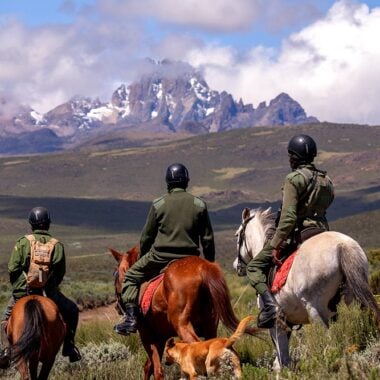
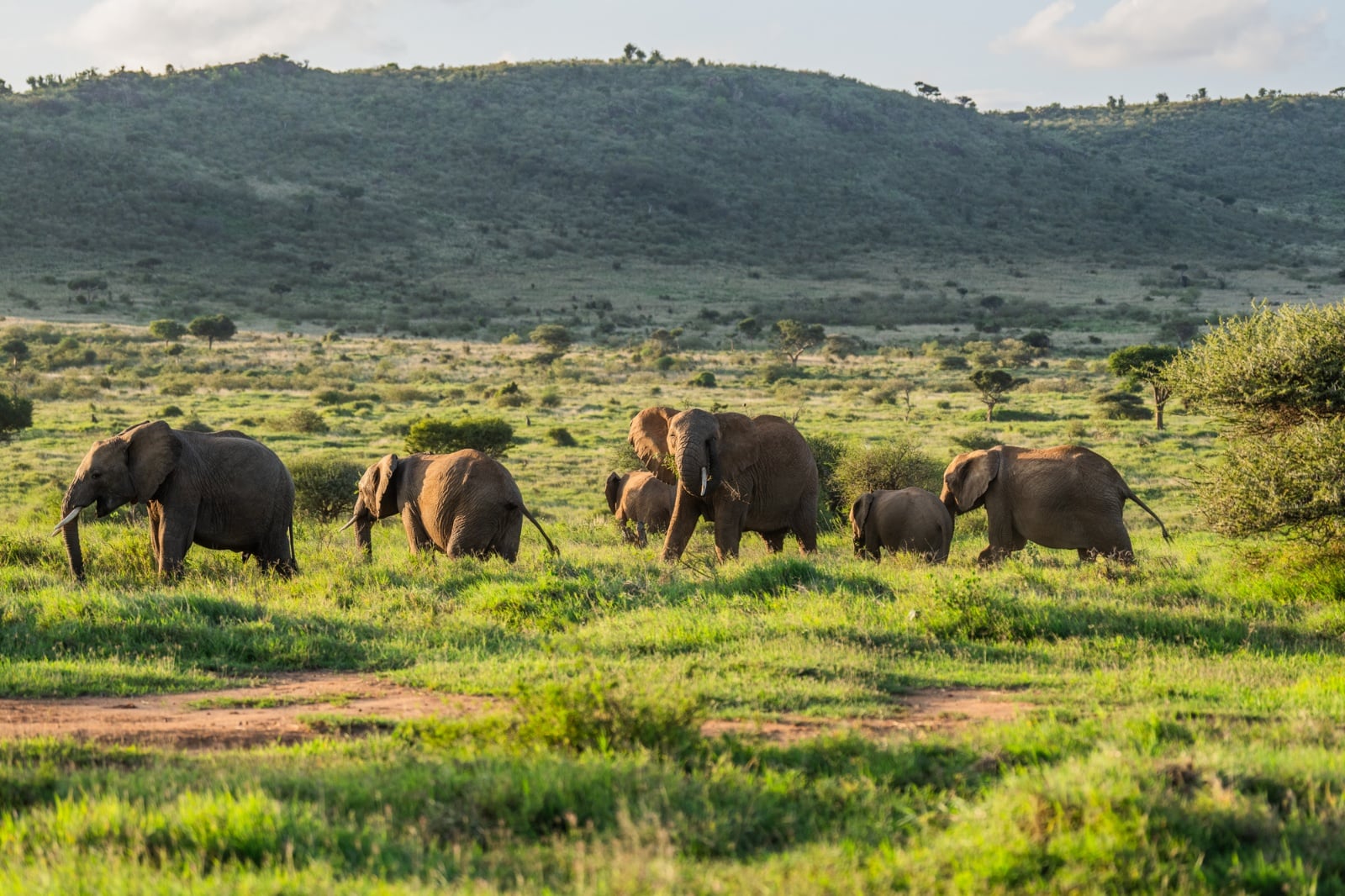
Originally arriving in the late 1990s to help manage cattle operations on the property, he watched Loisaba evolve from a working ranch into one of East Africa’s most respected conservation models. Today, the conservancy protects 58,000 acres of northern Kenyan wilderness, where open savannas, rocky kopjes, riverine forests, and sweeping views of Mount Kenya support an extraordinary diversity of wildlife.
Loisaba’s model rests on a simple but powerful principle: conservation, tourism, and community development must strengthen one another. “Conservation needs to be relevant to the people who live around it,” Tom explains. “If it isn’t, it won’t survive.”
It’s a philosophy that runs through every part of the conservancy’s work. Tourism generates revenue. Revenue supports conservation operations and community programmes. And when surrounding communities see real benefits—through scholarships, healthcare initiatives, grazing partnerships, and employment—wildlife becomes something worth protecting.
Hannah Campbell, Loisaba’s Chief Administrative Officer, sees that connection every day. “The wildlife attracts tourism,” she explains. “Tourism generates income, and that income goes back into communities and conservation.”
That cycle has helped build something more powerful than fences or patrols: trust. And trust, in many ways, has become one of Loisaba’s greatest conservation assets. Of course, trust alone doesn’t protect rhinos.
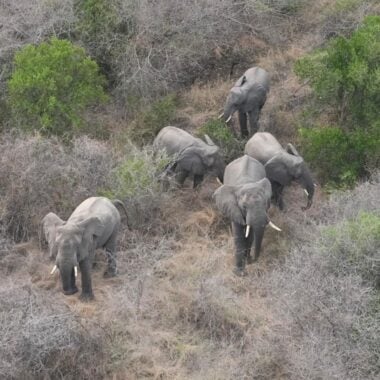
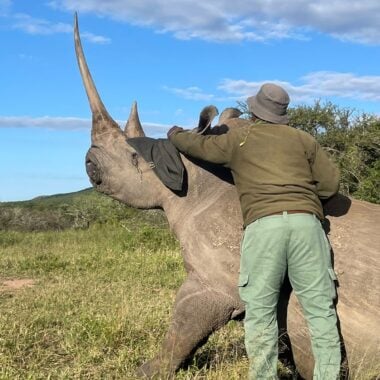
Loisaba is home to elephants, lions, wild dogs, Grevy’s zebras, and one of Kenya’s newest black rhino populations. The successful reintroduction of black rhinos (after 50 years) in 2024 marked a major milestone for the conservancy and for rhino conservation in Kenya, following more than six years of planning with the Kenya Wildlife Service. Today, Loisaba protects 39 rhinos, including eight calves.
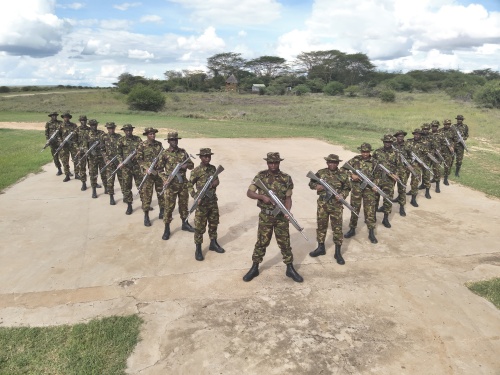
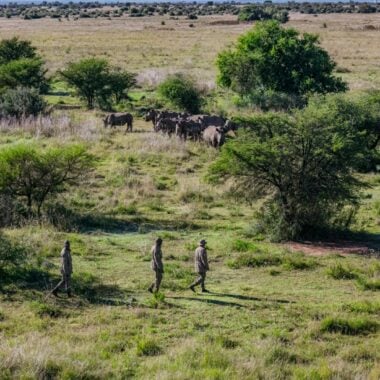
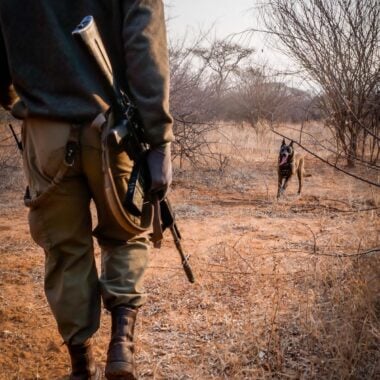
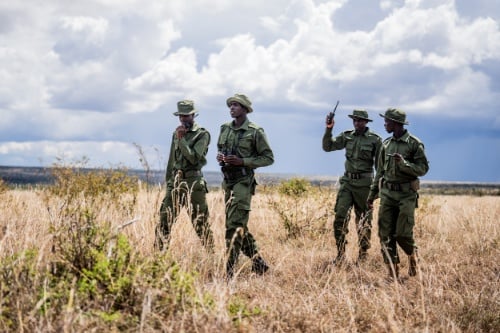
Before dawn each morning, rhino monitors head into the bush to patrol designated blocks, tracking movements and identifying individuals. Under Kenyan rhino management protocols, every rhino must be physically sighted at least once every 72 hours. If one cannot be located, alarm bells ring immediately.
Fortunately, many of Loisaba’s rangers bring generations of tracking knowledge with them. Most come from pastoralist communities such as the Samburu, Maasai, Turkana, and Pokot, where close observation of animals has long been part of daily life. “They recognise rhinos almost instantly,” Tom says. “They often don’t even need ear notches. They just know.”
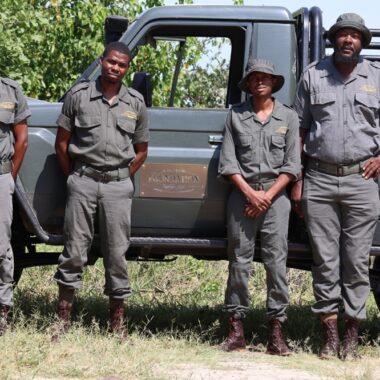
That instinctive understanding of animals is invaluable in the field, but so too is proper equipment. Loisaba’s security department includes more than 120 personnel, from armed rapid-response teams and rhino monitors to gate security, radio operators, drivers, and support staff. Across such a large operation, ensuring every ranger is properly equipped is no small task.
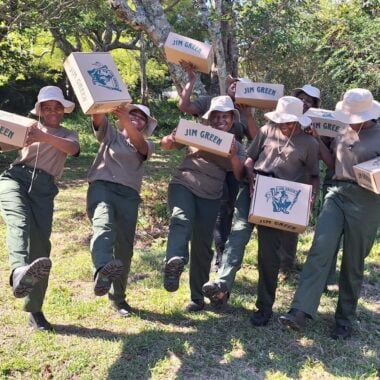
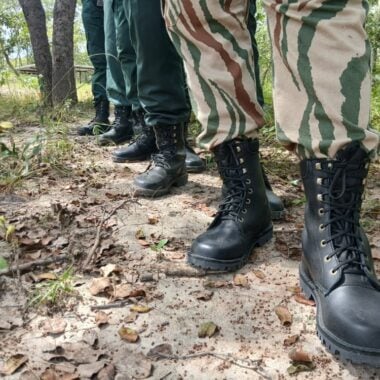
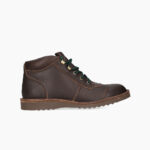
That’s why support from Jim Green’s Boots for Rangers initiative has made such a meaningful difference.“It’s a game changer,” Tom says.
At Loisaba’s scale, boots play a key role. Rangers cover tough terrain daily, and poor footwear can slow them down or wear them out. Tom also says that good boots do more than protect feet. “Morale matters too,” he says. “Looking smart, feeling properly equipped, it all matters.”
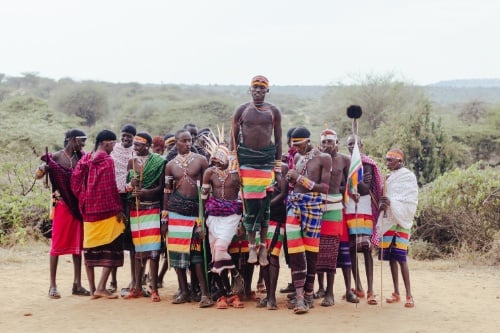
When rangers feel equipped and confident, the benefits ripple far beyond the individual. Loisaba sums up that interconnectedness in its rallying cry: Land connected, life protected.
As the conservancy develops its 25-year vision, the goal isn’t just to preserve a fenced wilderness. It is to maintain ecological connectivity across a wider landscape, ensuring wildlife can move freely rather than becoming confined to isolated pockets. “We don’t want to become a zoo,” Tom says.
Achieving that vision means confronting some difficult realities. Financial sustainability remains one of the biggest challenges facing modern conservation. Tourism provides vital income, but it is inherently fragile, vulnerable to global crises, economic shocks, and political instability.
Diversifying revenue will be key to Loisaba’s future. But after nearly 30 years on the ground, Tom knows the core of conservation hasn’t changed: people have to be part of it. If communities benefit, wildlife stands a better chance. And supporting the people protecting that wildlife often comes down to practical things, like making sure every ranger has the gear to do the job well.
Cheers,
The Jim Green Team
Through our Boots for Rangers initiative, run in partnership with the Game Rangers Association of Africa, we donate one pair of boots to a ranger for every ten pairs sold from our Ranger range. These boots support conservation teams at sites across Africa, with 8691 pairs already on the ground. As of 14/05/2026