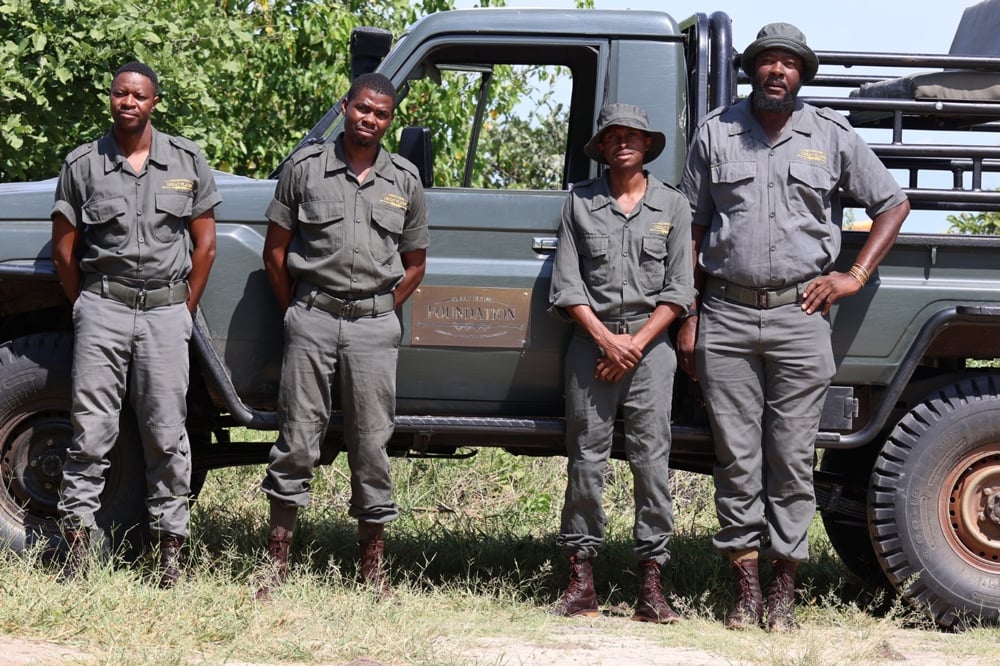
Some of the most important conservation work happens out of the spotlight. It’s the behind-the-scenes effort that makes everything else possible on the ground. The Great Plains Foundation (GPF) is a perfect example.
Based in the United States but operating across Botswana, Kenya, and Zimbabwe, the Foundation functions as the non-profit arm alongside Great Plains Conservation. While the tourism entity focuses on securing and operating land under conservation, the Foundation supports the systems that sustain it. They fund programmes, support communities, and build the logistical backbone behind conservation work.
Much of the land under Great Plains’ protection sits outside formal national parks, on community-owned conservancies and converted hunting concessions. In Kenya, Zimbabwe, and Botswana, these are landscapes where wildlife and people have long coexisted. By securing long-term leases and paying significant fees to communities, Great Plains helps ensure conservation becomes a shared economic model, rather than a competing land use.
The Foundation builds on this by investing directly into conservation and community initiatives within those landscapes. The approach recognises that long-term conservation depends on the people living closest to it.
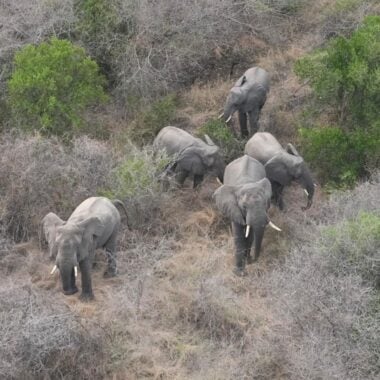
In northern Botswana, around 16,000 people share space with roughly 11,000 elephants. “They’re living day to day with animals moving in and out of these areas,” says Director Sarah Boeckmann, who has been with the organisation for a decade. “So it’s about making sure they benefit materially, but also building understanding of the intrinsic value of wildlife.”
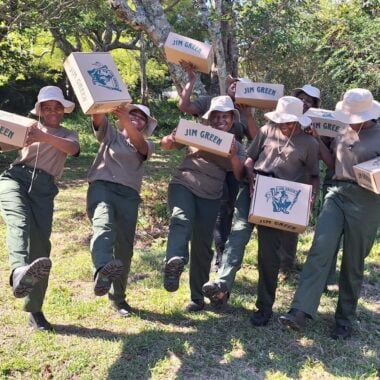
That balance between practical support and long-term perspective runs through many of the Foundation’s programmes. One of the most direct examples is its school feeding initiative in Kenya. Originally launched during a severe drought period, the programme provides daily meals (typically consisting of maize and beans) to students through local school systems.
“We were getting feedback that kids weren’t coming to school, and they didn’t have enough food at home,” says Boeckmann. “Now we’ve seen enrolment go up, and even older children bringing younger siblings with them.”
To date, the programme has delivered over 8.1 million meals. What began as a response to immediate need has become a consistent part of community support, with clear links to improved school attendance.
Transparency plays a growing role in how the Foundation measures and shares its impact. After starting with quarterly updates, in 2024 the organisation published its first annual report, a step that reflects both increased capacity and a commitment to accountability. “It helps with transparency for donors,” Boeckmann says, “but it also helps us internally to understand where programmes are working, where they’re not, and how to improve them.”
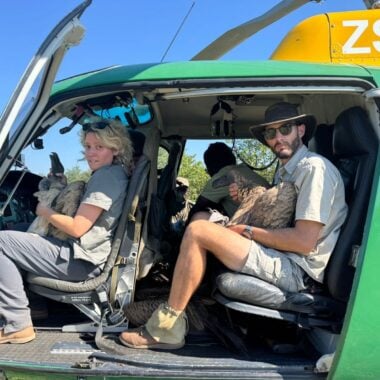
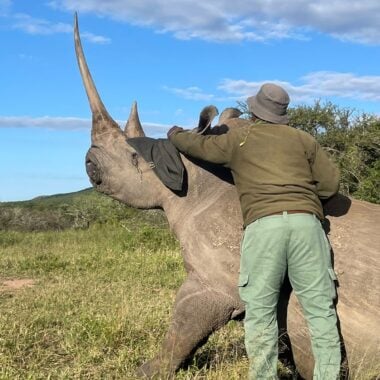
That same approach carries through to conservation work on the ground, from anti-poaching support to species recovery and landscape restoration. One of the most ambitious examples is a partnership with &Beyond, Rhinos Without Borders. This multi-year effort relocated 87 rhinos from high-risk poaching areas in South Africa to safer habitats in Botswana. “It involved permits, air transport, trucks, sometimes helicopters,” Boeckmann explains. “But rewilding is an important conservation tool, especially as human populations continue to grow.”
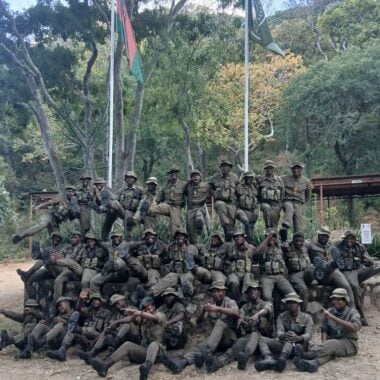
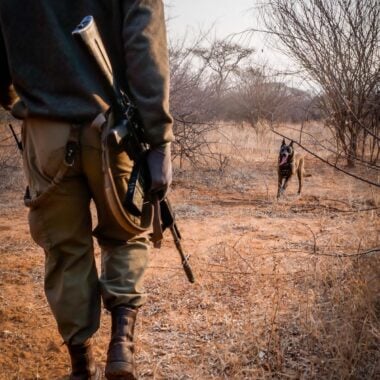
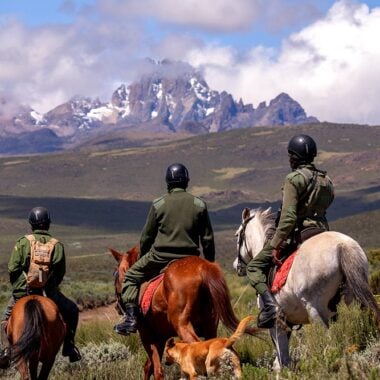
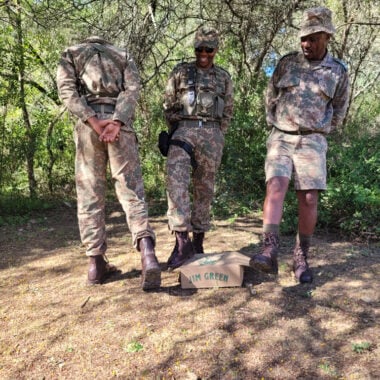
Rangers cover long distances across varied terrain, often in extreme conditions, managing both environmental challenges and the ongoing pressure of wildlife protection. Reliable equipment plays a critical role in that work.
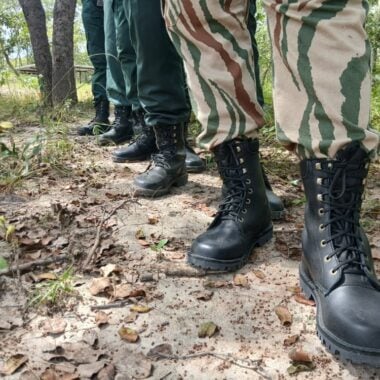
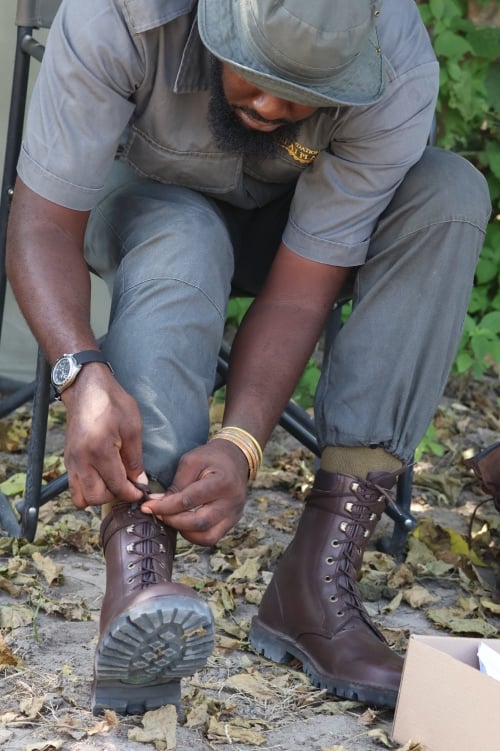
“Reliable footwear is an operational requirement in the field,” says Operations Manager, David Rubadiri. “Rangers cover long distances in challenging terrain, often under extreme conditions, and any failure in footwear can compromise safety and mission effectiveness.”
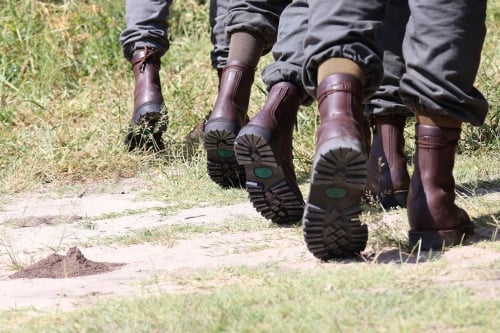
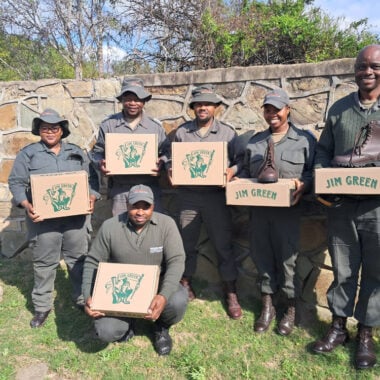
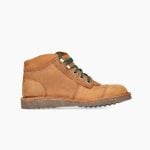
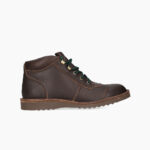
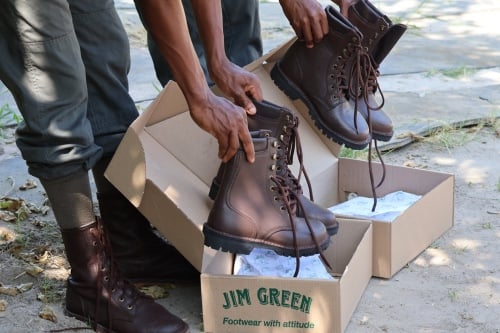
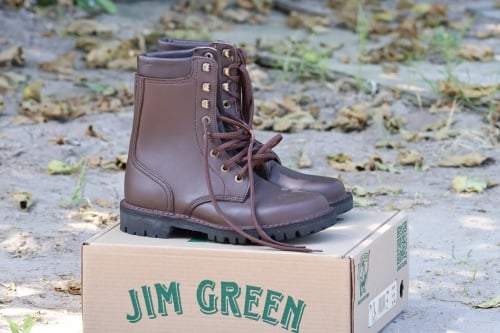
He points to the role of Jim Green boots in supporting those demands. “They are durable, comfortable for long patrols, and provide strong support and grip. This reduces injuries and fatigue, allowing rangers to stay operational for longer periods.”
From a management perspective, the impact is clear. “Investing in quality footwear is not just about welfare,” he adds. “It directly supports operational efficiency, improves field performance, and strengthens overall conservation impact.”
Across all of this, a consistent thread emerges: conservation here is built through long-term coordination between land, wildlife, and the people who live alongside it. It’s a model that depends on trust, sustained investment, and the ability to adapt over time – both on the ground and behind the scenes.
Cheers,
The Jim Green Team
Through our Boots for Rangers initiative, run in partnership with the Game Rangers Association of Africa, we donate one pair of boots to a ranger for every ten pairs sold from our Ranger range. These boots are now supporting conservation teams at sites across Africa, with over 6,000 pairs already on the ground.