The first time Picket Chabwedzeka left home for the city, it wasn’t to become a ranger or a trainer. It was to juggle plates and textbooks.
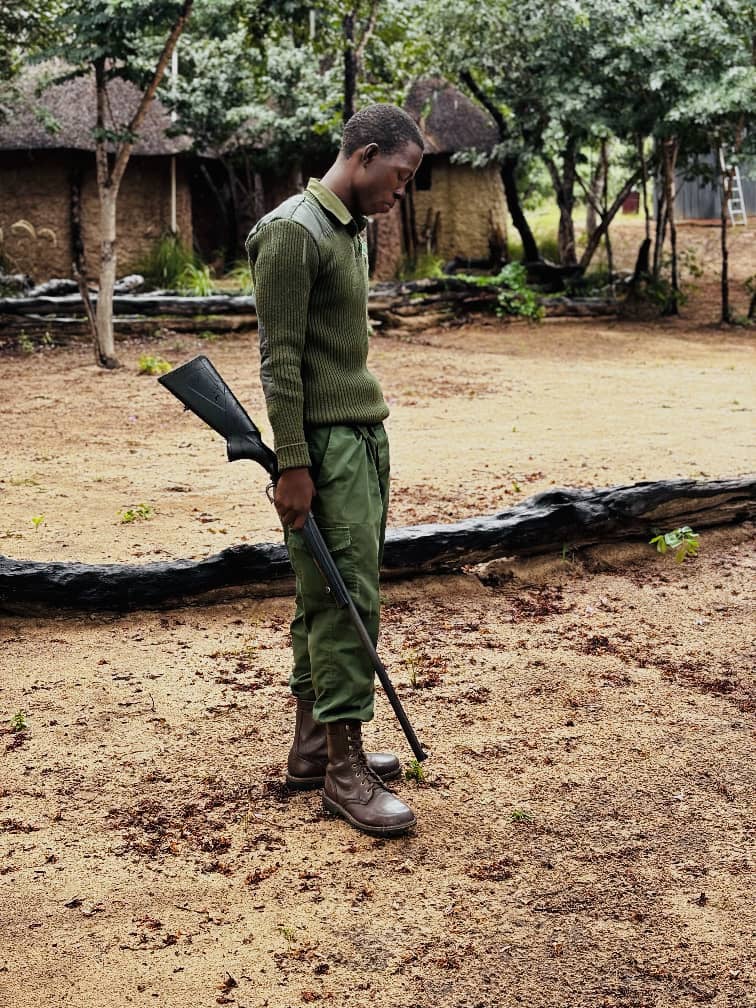
“I moved to South Africa and was working while studying part-time,” he says. “For three years I lived in Goodwood, studied at Pentech and UNISA, and worked as a waiter in Century City.”
Between shifts, he buried himself in nature conservation and environmental management, laying the foundations for a career that would pull him back to the bush, and eventually help reshape how rangers are trained and deployed in Zimbabwe.
After his studies, Picket moved to the Lowveld, specifically the Witrivier area, where he began his student attachment. “I ended up staying in that area for five years,” he says. “I started as a student, became a guide, attained level two for FGASA guiding, and then became assistant reserve manager when I left.”
That’s where tracking and ranger training first took hold. In 2010, he began training at the Southern African Wildlife College, learning the skills that would become the backbone of his future work.
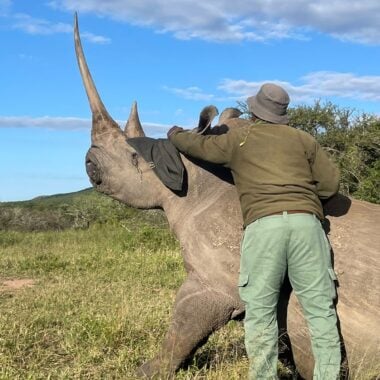
From there, he headed to KwaZulu-Natal. “Mountain View introduced me to white rhinos, where I developed a strong passion,” he explains. “Then I went to Somkhanda, where I worked with black and white rhinos. That was the onset of my black and white rhino management and the development of my interest there.”
Somkhanda Game Reserve, a community-owned reserve managed by Wildlife ACT at the time, became a turning point.
“In KZN, I was an internship program manager,” he says. “I worked with a lot of overseas students, a lot from the UK. We were conducting field research, some guiding, and reserve work. Because Somkhanda is a community-owned game reserve, it opened doors for me in terms of understanding conservation, people, and their impact.” Conservation and people have defined his work ever since.
In 2015, Picket came back to Zimbabwe and went straight to Victoria Falls. “I started working as an anti-poaching manager for Victoria Falls Private Game Reserve,” he says. “I was there for six years, then became the reserve manager for the last four years. So I’ve been with the park for 10 years.”
He kept studying. After returning home, he completed a postgraduate qualification in ecological survey techniques with Oxford, followed by a research master’s degree in Zimbabwe. “I became an ecologist in 2019,” he says. “Working as an ecologist before I became a park manager, I noticed the need for rangers to collect proper data that can be used in effective park management.”
That realisation became the spark for something bigger, and in 2015, he founded Game Ranger and Tracker Training Specialist (GRTTS), a private limited company with a very public mission: to professionalise rangers, empower communities, and fill the gaps between protected areas and the people who live alongside them.
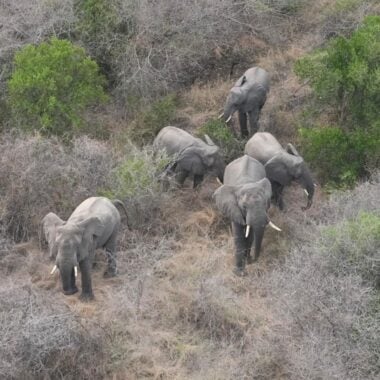
Zimbabwe’s conservation landscape looks very different from South Africa’s. “In Zimbabwe, we don’t have a lot of fenced wildlife areas,” Picket explains. “It’s just a road…the demarcation is just a road, and that’s it. Animals are moving all over the place; they’re in communities. There is a lot of human-wildlife conflict in communities and national parks.”
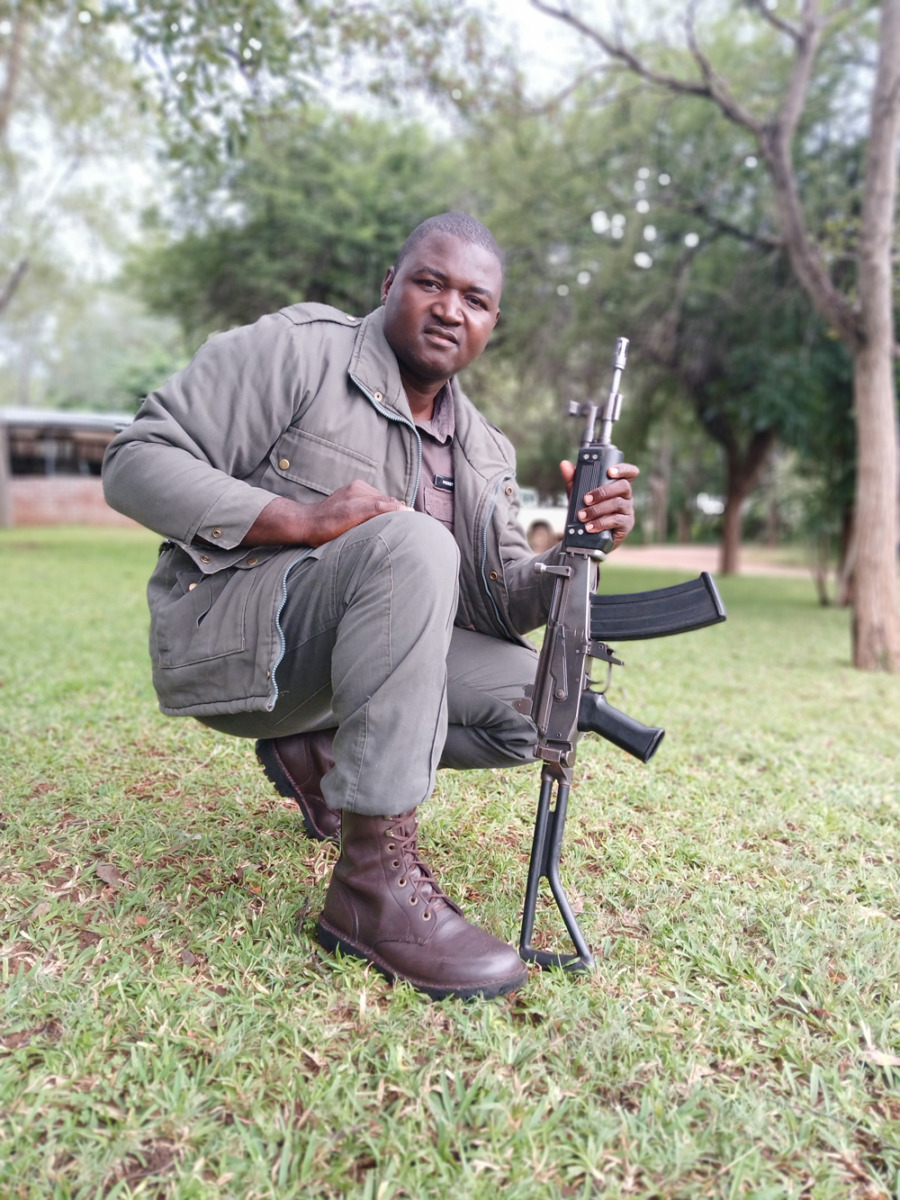
National park rangers protect what’s inside the park boundaries. The Forestry Commission oversees state forests. But beyond that? “Private landowners with wildlife are on their own,” he says. “Communities, villages…they’re on their own. In South Africa, I saw how private landowners worked closely together. They would have committees and share resources. In Zimbabwe, they are very fragmented, and each does their own thing.” GRTTS stepped into that gap. “I felt the need to jump in and try to get landowners to understand and agree on one thing: the professionalisation of their staff,” he says.
“So that when they collect data, it is data that is valuable and can be used by wildlife managers.”
Too often, landowners simply hired “cheap labour” from nearby villages, handed them a uniform and a torch, and sent them into the bush. “No training, not much explaining conservation or sustainability,” Picket says. “We were getting rangers who just walk around, come report what they think is needed, and they go. Those rangers are amazing. They are seeing a lot on the ground, but if they don’t have the structure to report those things, they just disappear.”
GRTTS, he explains, is built around three pillars: “We train rangers, we deploy rangers, and we manage protected areas.”
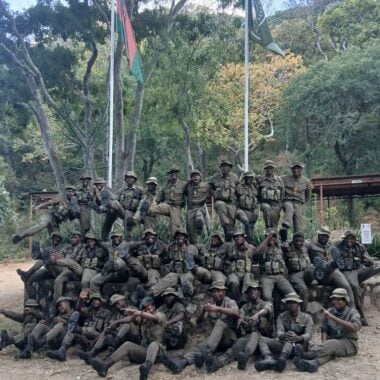
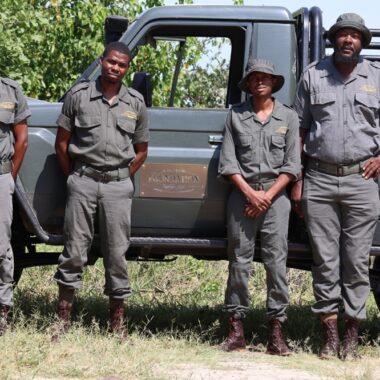
“So far, we have a few concessions that we are now fully assisting to manage,” he says. “I do this with a team of 50 rangers who are GRTTS rangers.”
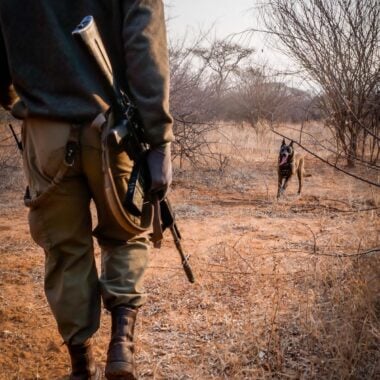
They run an 8–10 week basic ranger course, a 21-day advanced ranger course, selection courses, small-team tactics, patrol leadership, and a dedicated tracking program. “I am currently studying for my PhD in tracking,” he says. “Tracking is a passion for me. I see it as a science and an art. I go out in the field a lot, even with my current job.”
To keep standards high, they cap the number of intakes. “We usually take 30 people at a time,” he says. “So that we can manage and make sure we have person-to-person assessment for the best results.”
Training happens at a leased training area in the Midlands, near Gweru—7,800 acres of land where both community recruits and privately employed rangers learn side by side. Sometimes GRTTS hosts them there; sometimes the team travels to a client’s reserve.
If money followed impact, GRTTS would be overflowing with funds. The reality is very different. “Landowners, yes, as much as they want trained, more professional rangers, they’re also not willing to pay for those staff to be trained,” Picket says. “For their business, maybe it’s not doing well. And they know the status quo tells them: these guys just do the work, whether they’re trained or not, we get our results.”
So GRTTS barely gets by. Training fees and management contracts only cover part of the costs. “We don’t have a very sustainable income coming in,” he says. “Though we have a team that is positive and enjoys their job, they need to be paid.”
More than once, he’s bridged the gap out of his own pocket. “Most of the time I’m using part of my salary from Victoria Falls Private Game Reserve also to pay their salaries,” he says. “It’s sort of like a big pool where we’re sharing resources.”
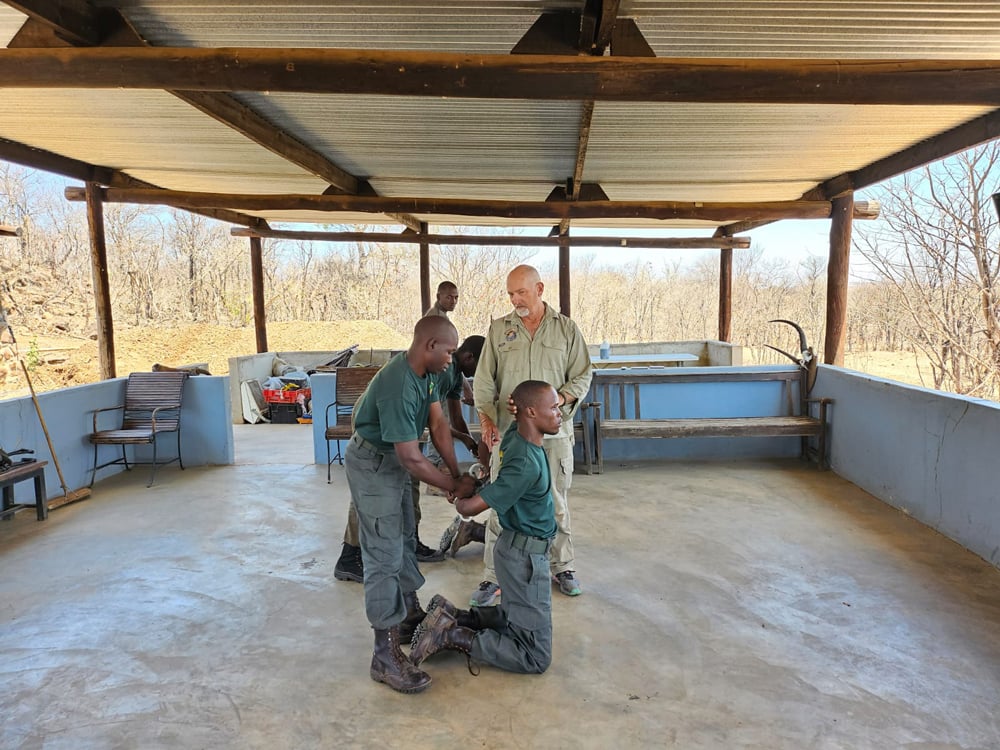
The commitment hasn’t been cheap. “I have survived by getting bank loans to buy vehicles and stuff,” he says. “Up to today, we’ve had no funding from any organisation. The first was Jim Green with GRAA. That’s the first donation we got. So we are very appreciative of that, because this is after 10 years of our work, pushing on our own.”
He doesn’t take that survival lightly. “I see God’s hand in it,” he says. “I’m a firm believer that the work we are doing, saving wildlife and saving people’s lives from human-wildlife conflict, God has been in it supporting us.”
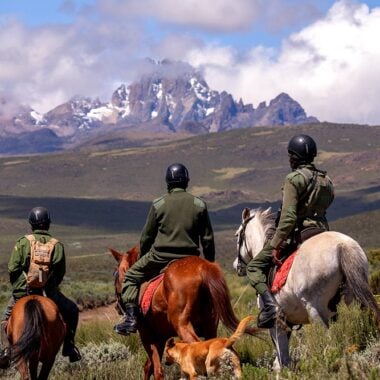
One of the most distinctive things about GRTTS is who they prioritise: women. “My key interest is women—females in wildlife and conservation—and rangers in the community,” Picket says. “We operate a lot around communities that are unprotected areas.”
The reason is simple and deeply practical. “Zimbabwe is more of a subsistence farming community,” he explains. “Animals are leaving protected areas and going into village fields. Because of the current economic hardships, many men are in South Africa, and a lot are in the UK. They are all over. The women are at home, and they’re the ones trying to fend off elephants coming to feed on their crops.”
“If we can employ and empower these female rangers, working together with the men, the impact we get is huge,” he says. “What the female ranger gets goes to the community, goes home to the kids. The kids do well at school. When we do school outreach, the women are the ones who are going to the schools.”
He’s seen what that looks like in real life. “The kids see these women dressed in uniform, looking amazing,” he says. “But they also know, this is a mother from our village. Now, wow, she’s teaching us this.”
It’s inspiring a wave of interest. “The number of people from the villages who want to get trained because they’re seeing the women is amazing,” he says. “We are known now as a training company. What we need is to train. If we can train them, they get jobs somewhere else. But training is expensive.”
Beyond inspiration, women make highly effective law enforcers, too. “We don’t get so many police reports of arrests done by women,” he says. “When men arrest someone, and it goes to the police, the accused person always complains that he was assaulted. But when females arrest them, this doesn’t really happen. I’ve seen that the female rangers explain a lot. When they arrest someone, they explain the reason before they hand him over.”
One of his proudest examples is very close to home. “One of the leaders in the female team is my sister,” he says. “When I had the idea of starting this, she supported me and said she wanted to train. She completed the basic ranger course and passed. Then she did the advanced ranger. The advanced ranger is very tough. There is a 50-kilometre-long march, with 20 kg of material and a rifle. She marched with men; she was the only lady on that team because we were trying to reach the APU commanders. And she passed. I was proud.”
Looking ahead, Picket wants to keep investing in his people. “We’ve applied to GRAA that in the coming year, if there are any bursaries, we’d like to send at least four or five of our rangers to the Wildlife College in South Africa,” he says. “So they can meet other rangers, learn, and train better. When they come back, we get better and better in our work.”
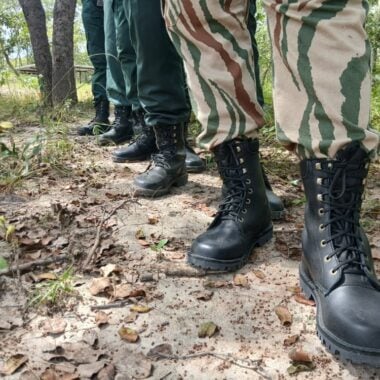
Running a 50-strong ranger team, feeding trainees for weeks at a time, and keeping operations going in unprotected community landscapes leaves little room in the budget for basics like boots. “Buying boots and uniforms is expensive for us,” Picket says. “We don’t have a very sustainable income. Boots came at the time when we really needed them.”
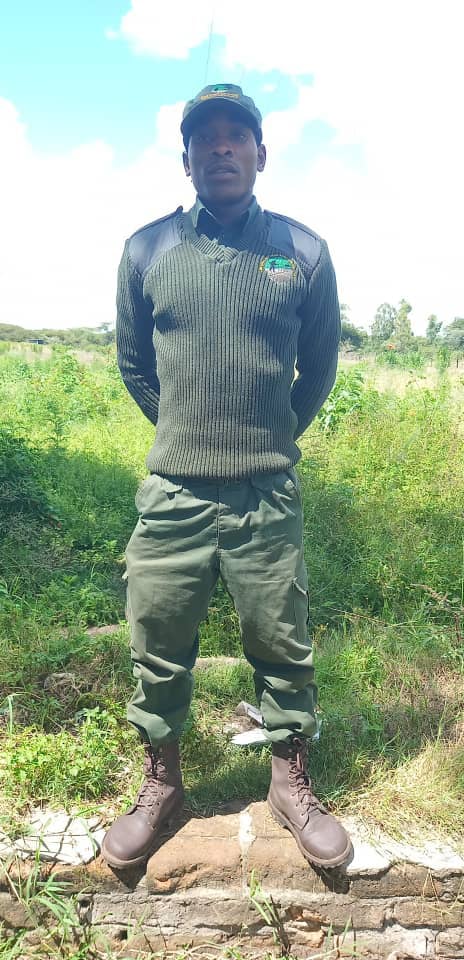
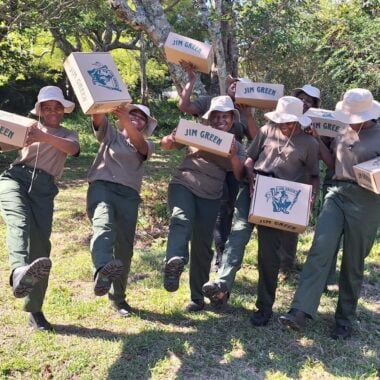
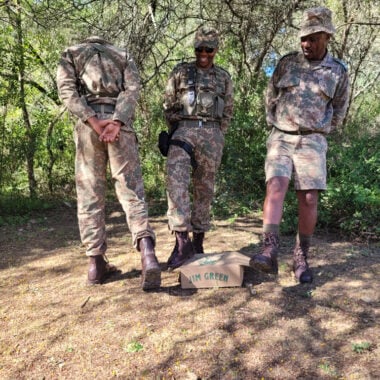
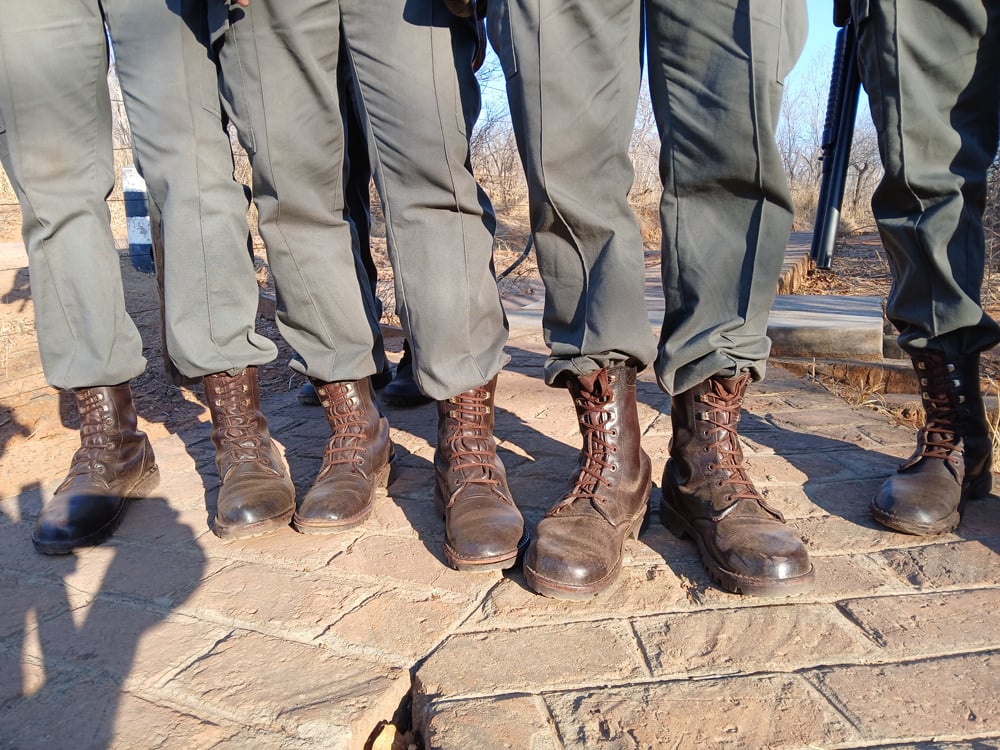
Through the Boots for Rangers initiative, run in partnership with the Game Rangers Association of Africa, GRTTS received 40 pairs of Jim Green boots, a rare relief. “We are very appreciative,” he says. “That’s a huge cost saving for us.”
The difference showed immediately. “The boots helped maintain the uniformity of our team,” he explains. “When we were buying in batches, there was always a slight change, but with Jim Green, guys are excited. The boots are good.”
And they’re built for how these rangers work. “Our female rangers told me the boots are fairly light,” he says. “They’re doing 15, 20 kilometres on boundary patrols… They’re covering a big area, and those boots are really good and very smart.”
Even on parade, he notices it. “We do marching drills for inspections,” he says. “The way they appear is amazing.”
After a decade of bank loans, dry seasons, and long nights in the field, this support simply makes a tangible difference.
“We have done so many things,” Picket says quietly. “It has been a long journey.”
Cheers,
The Jim Green Team
Through our Boots for Rangers initiative, run in partnership with the Game Rangers Association of Africa, we donate one pair of boots to a ranger for every ten pairs sold from our Ranger range. These boots are now supporting conservation teams at sites across Africa, with over 6,000 pairs already on the ground.