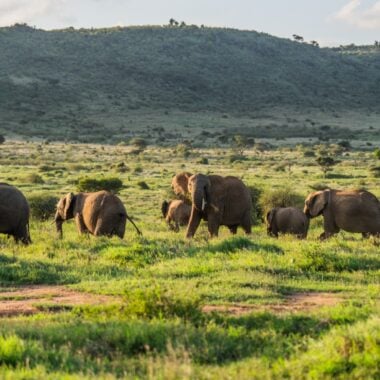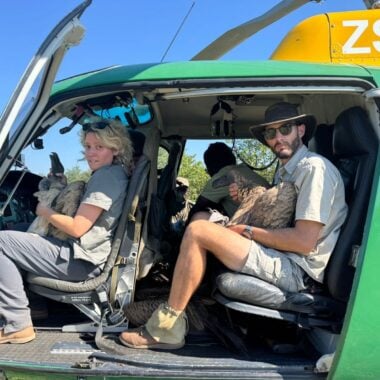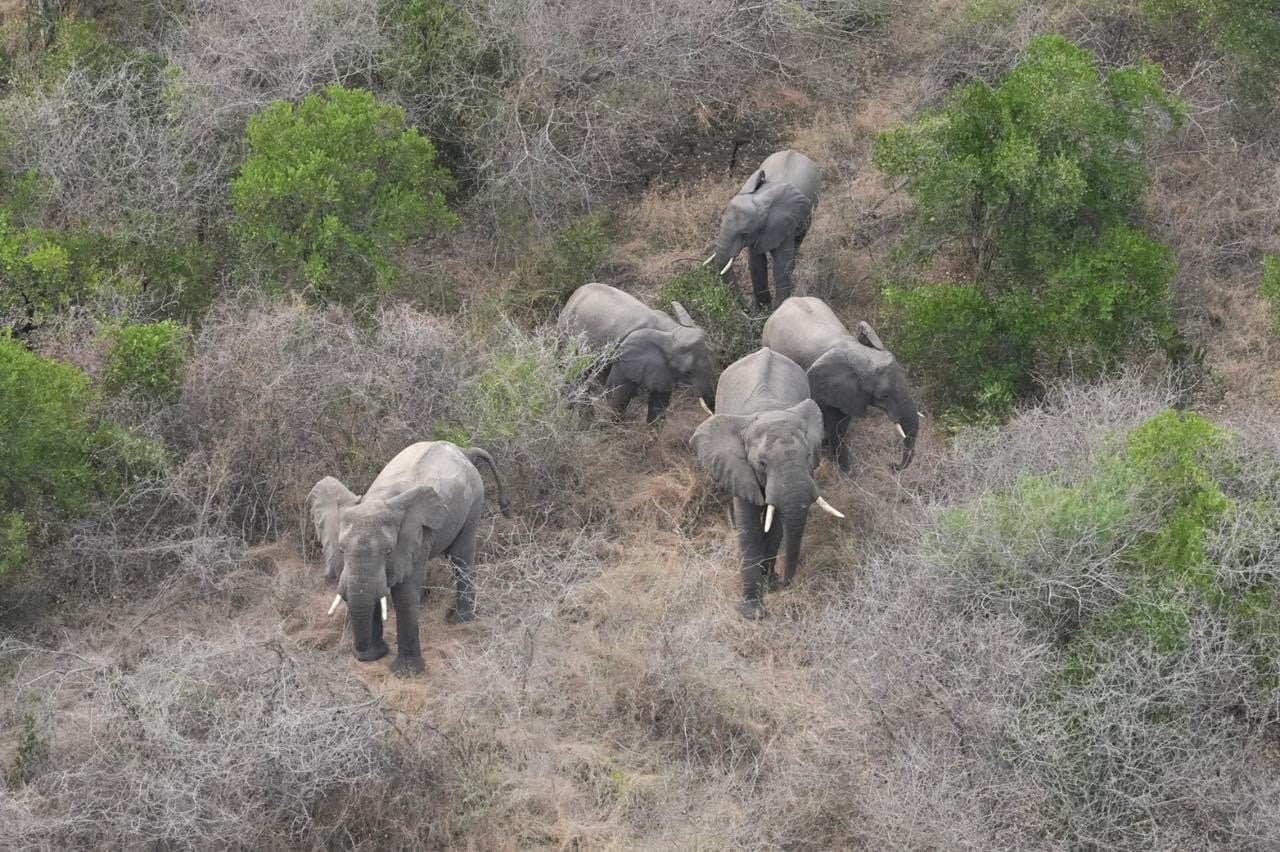
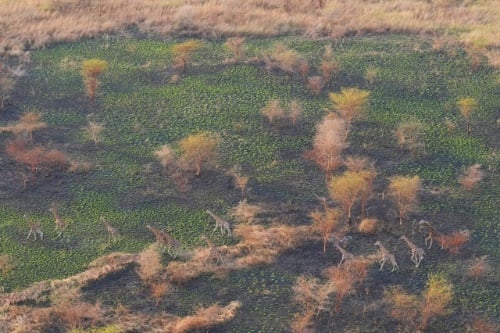
Badingilo National Park sits within one of the largest land mammal migrations on earth, but on the ground, that movement is rarely visible. From where the team is based, most wildlife sightings come not from patrols, but from the air. “We’re on the southwestern edge of the migration,” says African Parks’ Law Enforcement Mentor for Badingilo. “We don’t see animals here every day. Most of what we know comes from aerial surveillance.”
That sense of distance influences how the park is managed. Rather than operating in the heart of the migration, teams strategically focus on the edges, the places where animals are most vulnerable.
Badingilo is a relatively new project under African Parks, and in many ways, it’s still being built from the ground up. When operations began, there was little reliable ecological data to work from. The first step was simply understanding the landscape. “We had to map everything ourselves,” the Law Enforcement Mentor explains. “Flights, tracking movements, trying to understand where animals are and how they move.”
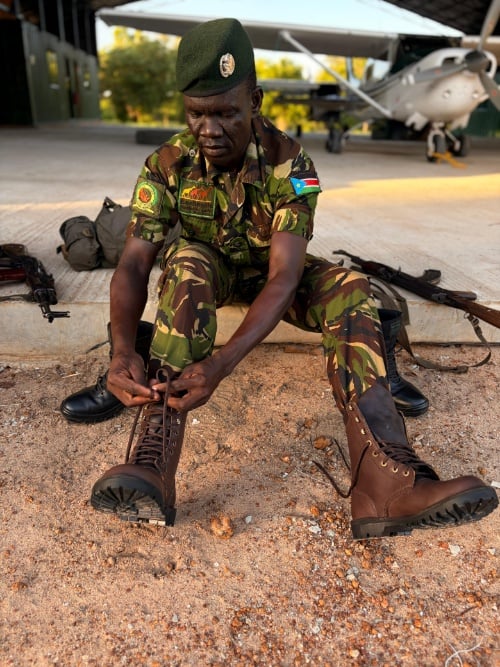
“Our first priority was security.”
South Sudan is a complex operating environment. Years of conflict have left behind a landscape where law enforcement is limited, resources are stretched, and communities are often forced to survive however they can.
One of the initial major challenges inside the park was charcoal production. It’s a common livelihood in areas with limited economic opportunity, but in Badingilo, it brought more than just deforestation.“Charcoal making also attracts banditry,” the Law Enforcement Mentor says. “You get people trying to make a living, and then others targeting them. It creates a lot of instability.”
Instead of responding with immediate enforcement, teams worked with communities to shift the activity outside the park boundary. “We started by educating people. Telling them, if you move your camp just a few kilometres, you’re outside the park. You can continue there.”
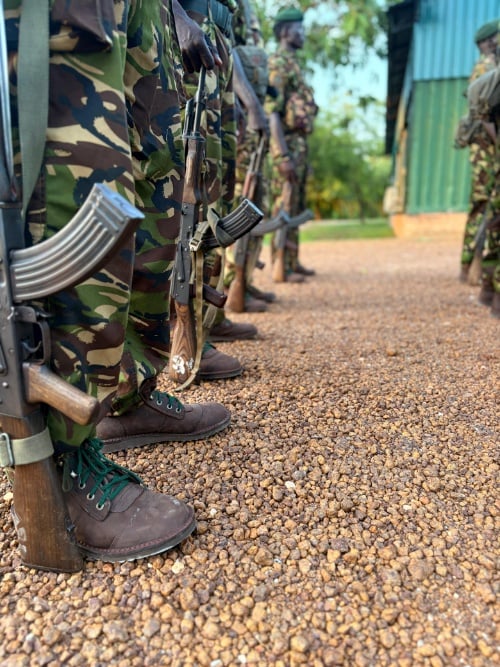
Only once that message had been clearly communicated did enforcement follow. Over time, the western side of the park was cleared of charcoal production, reducing both environmental pressure and the instability that came with it.
With that initial focus on security and access under control, attention gradually shifted toward wildlife protection. One species in particular is at the centre of that effort. “The tiang is our main focus,” he says. We see that they’re being hunted, and we want to make sure it isn’t unsustainable, so they are still found here as part of the migration.”
Protecting these animals means understanding their movement. During the dry season, tiang migrate north, often outside the park, where they are heavily targeted. In the wet season, they move back south, passing through areas where communities live and hunt. Seasonal movement creates a moving target for conservation teams. Inside the park, rangers patrol known hunting areas and act as a deterrent.
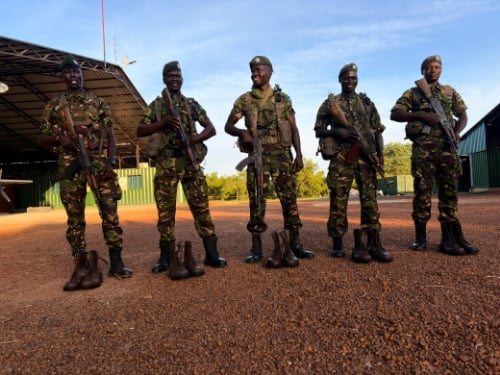
Outside the park, African Parks works with the Ministry of Wildlife Conservation and Tourism, supporting more than 100 government rangers operating in surrounding areas. “We don’t have the mandate outside the park,” the Law Enforcement Mentor explains. “But we can support the ministry to do the work where it’s needed.”
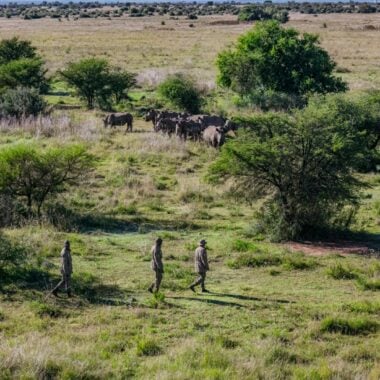
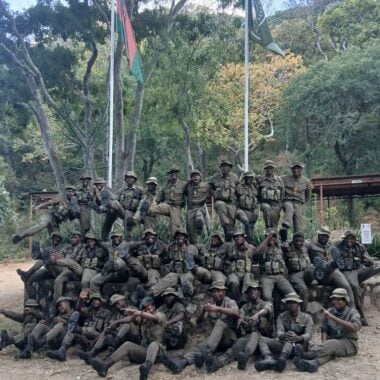
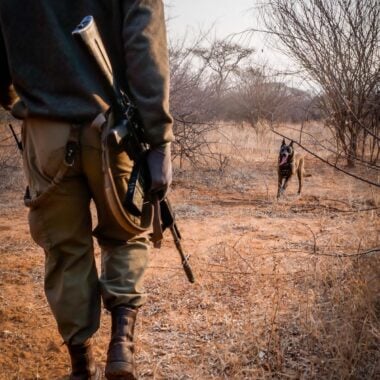
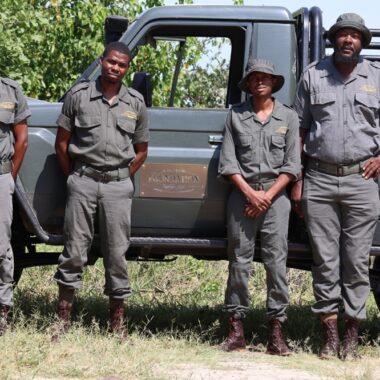
On the ground, the team managing this landscape is still relatively small. There are currently 36 field rangers, supported by additional guards, with plans to expand through a new intake later this year. Their work is physically demanding. Rangers are up before dawn and often set out for patrols by 5:30.
Days are spent moving through terrain that shifts dramatically with the seasons. In the wet season, large parts of the park become swamps. Vehicles can’t pass, and even on foot, movement is slow. Grass grows up to three metres high, cutting visibility and making navigation difficult. “It’s very hard to move through,” he says. “Foot patrols are often the only option.”
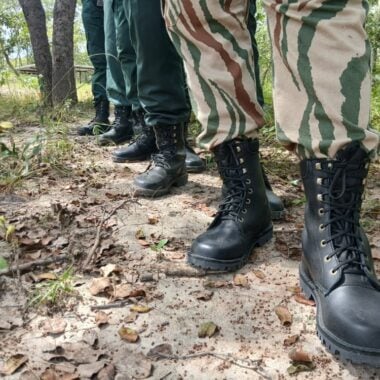
In those conditions, small things start to matter more. “A ranger’s feet are one of his most important tools,” he says. “In this terrain, a good pair of boots makes a world of difference.”
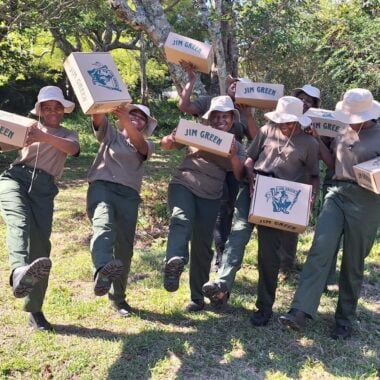
With the first delivery of boots from the Boots for Rangers initiative only arriving recently, the impact is yet to come.“Instead of covering five kilometres over a few days, you can do three times that,” he explains. “Just because your feet are taken care of.”
Beyond logistics, one of the most complex parts of the work lies in building relationships with communities. In a country shaped by conflict and instability, trust is not something that comes quickly. “It’s a slow process,” he says. “You can build trust over time, but it can also break very easily.”
Even necessary actions, like arrests, can strain those relationships, particularly where practices like charcoal production have been passed down through generations. “People don’t always understand why something that was done before is no longer allowed,” he says. For that reason, much of the work starts with engagement, explaining not just what is being done, but why.
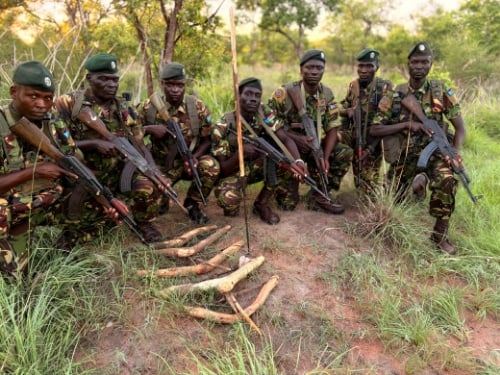
Alongside law enforcement, the physical infrastructure of the park continues to grow. A headquarters has been established, along with an access road, airstrip, and solar power system. Ranger accommodation and operational facilities are expanding steadily.
It’s a long process, but one that is beginning to take shape.
When asked what success would look like down the line, we’re given a simple response. “If we can stop the hunting in the key areas and get communities on our side, that would be success,” the Law Enforcement Mentor says.
It’s an ambitious goal in a landscape this complex, but it reflects a broader reality of conservation in places like Badingilo. Progress is rarely immediate or straightforward. The migration may be one of the largest on earth, but protecting it happens over time in smaller, quieter ways.
Cheers,
The Jim Green Team
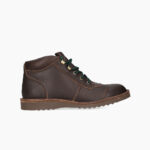
Through our Boots for Rangers initiative, run in partnership with the Game Rangers Association of Africa, we donate one pair of boots to a ranger for every ten pairs sold from our Ranger range. These boots are now supporting conservation teams at sites across Africa, with 8691 pairs already on the ground. As of 14/05/2026