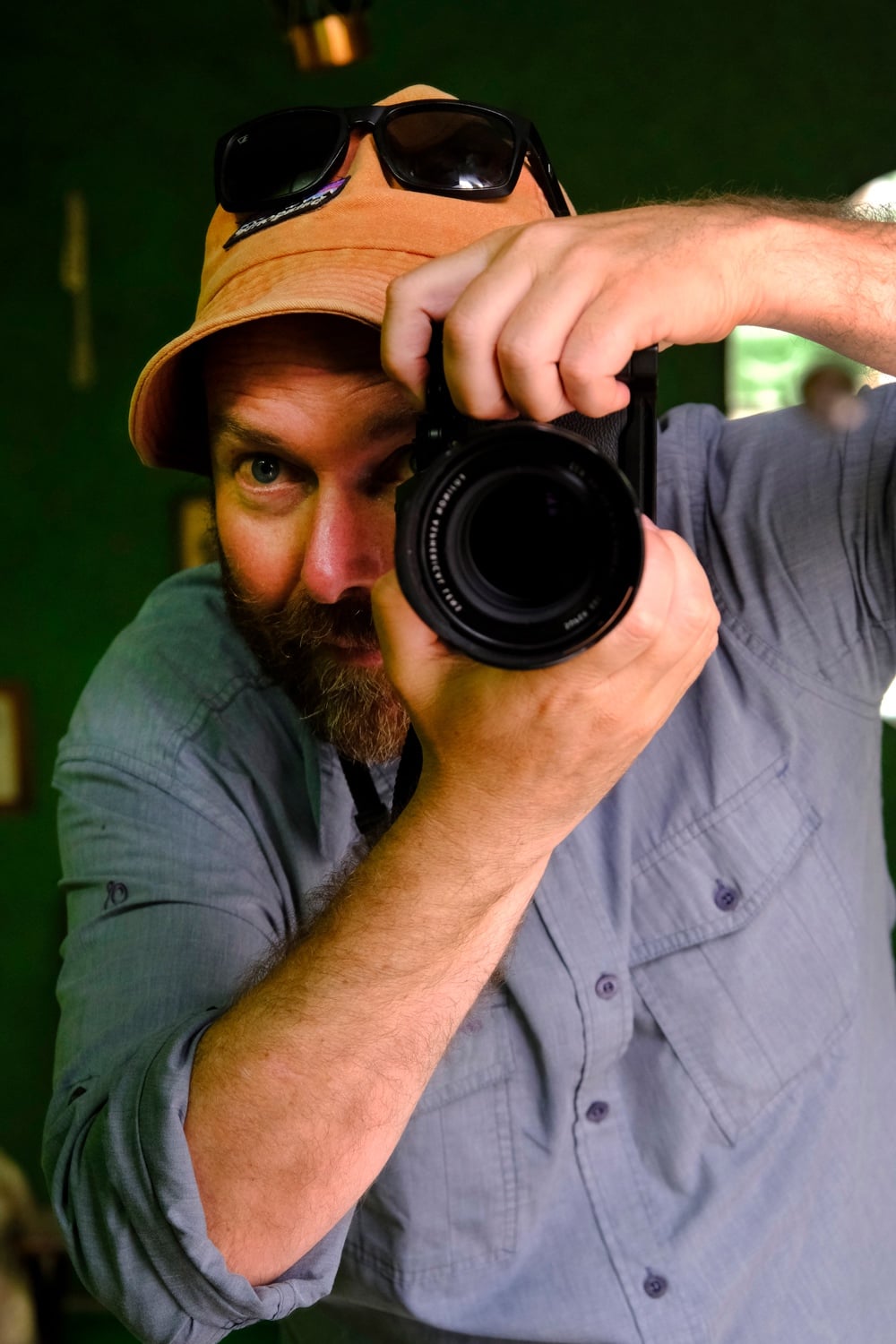
Growing up, Toast Coetzer spent most weekends on his family’s farm in Cradock, Eastern Cape. His parents would pack a picnic, drive to a far corner of the farm, and spend the day walking with little plan. They’d stop to turn over rocks, look at tracks, and identify birds. “You don’t realise it at the time,” he says. “You just absorb it.”
That early attention to detail influenced how he sees and describes the world. By high school, he was photographing sports matches, putting together the school newspaper, and writing match reports for the local paper. Words and images came easily, and more importantly, they held his attention.
He studied journalism at Rhodes University in the late ’90s. It was also where he brushed up against the edges of media and culture in South Africa at the time. While at university, he became loosely involved with Laugh it Off, a small but influential project that used parody T-shirts to critique corporate power. One of the slogans he suggested, “Black Labour White Guilt,” (a Black Label parody) ended up at the centre of a legal battle with South African Breweries. The case went all the way to the High Court before Laugh it Off was cleared of trademark infringement. This was an early indication of his ability to write with intent, while paying attention to context. He understands that words can carry weight.
After graduating in 1999, he taught English briefly in South Korea before returning to South Africa and finding his footing in publishing. He started contributing to Weg! Travel magazine since its inception in 2004 and joined the full-time editorial staff as senior journalist once the English version (go!) was launched in 2006. Nowadays, he writes, edits, commissions, and helps shape multiple special editions each year, including regional issues focused on places like Botswana, the Karoo, and the West Coast.
“I enjoy the process,” he says. “Taking all these different pieces and turning them into something that works.” A large part of that process is editing. Not all submissions come from trained writers. Often, they’re from travellers who have had a meaningful experience but don’t necessarily know how to structure it. That’s where Toast comes in.
“The power isn’t always in beautiful writing. Sometimes it’s just explaining something properly,” he says.
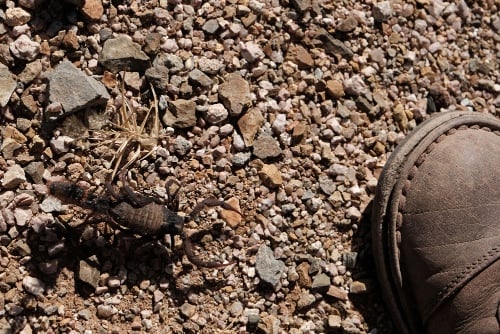
This philosophy extends to his own work. His writing is often grounded in specifics that allow the reader to really picture a place. A bird is named, located, and placed within a scene. “The more things you can name, the better you understand it,” he says. “And the better the reader can see it.”
Alongside his magazine work, there’s Ons Klyntji, a project that has followed him for most of his adult life. The title dates back to 1896, making it the oldest Afrikaans magazine name still in circulation. It has taken different forms over the years, disappearing and reappearing, before being revived as a small, independent zine by musician and writer Koos Kombuis in the 1990s.
Toast came across it as a student and later took it on with his friend Erns Grundling, inheriting it in a fairly informal way. “We basically ran it out of our back pockets,” he says. “If we had money, we printed it. If we didn’t, we skipped a year.”
Over time, it evolved into something more structured. Today, it’s a collaborative effort, with a small group of contributors working together to produce an annual print edition, alongside a separate online platform (klyntji.com). The purpose has remained consistent. It’s a place to publish.
“We end up putting out a lot of first-time writers,” he says. “Sometimes school kids, sometimes someone in their seventies. People who’ve never had anything published before.”
While the name is rooted in Afrikaans, the zine itself has long been multilingual, roughly split between Afrikaans and English. That shift came naturally. “There’s no reason to limit it,” he says. “There are good stories in both.”
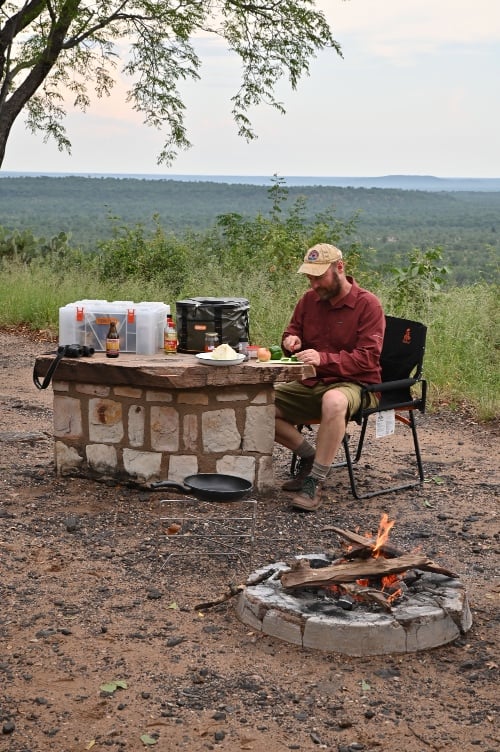
“It’s one of those projects where it just feels worthwhile,” he says.
As with most multi-hyphenates, by definition, he isn’t entirely satisfied with sticking to one thing. Toast is also the vocalist and lyricist of The Buckfever Underground, a South African folk-punk band he co-founded in the late 1990s.
The project has always sat slightly outside the mainstream. Their work moves between English and Afrikaans, blending spoken word with music, and leaning into themes that are observational, sometimes political, and occasionally irreverent. One of their early tracks, “Die Volk (is in die kak),” was included in a Dutch list of the top 100 protest songs of all time, while their album Saves was named among the best South African releases of the 2000s.
The band performs and releases music when it makes sense rather than on any fixed schedule. But it has remained a constant. It’s another way of working with words, just in a different form.
That way of working shapes how he travels, too. He doesn’t chase highlights or bucket-list moments. “I don’t really have bad travel stories,” he says. “It’s always an adventure.”
What tends to stay with him are the places that shift your sense of scale. Remote islands, in particular. Places that sit well outside normal travel routes. He’s spent time on islands like St Helena, best known as the place where Napoleon Bonaparte was exiled, and Marion Island in the southern Indian Ocean. Small, isolated places are shaped as much by history and weather as by geography.
Tristan da Cunha, one of the most isolated inhabited islands in the world, has stayed with him the most. Getting there takes commitment. There are no flights, only a ship journey from Cape Town that takes close to a week. When you arrive, you’re dropped off, and the ship disappears over the horizon.
He stayed for a month with a host family in a community of around 250 people. Life is small and self-contained. There’s a single settlement, a shop, a rhythm built around weather and supply ships. Most goods arrive by boat. Some days, you can’t leave the house because the rain doesn’t let up. Other days, you walk out of the village and into open slopes where seabirds nest and the ocean is always in view.
“It’s one of the wildest places I’ve been,” he says. “But people live normal lives there.”
It’s part of a broader fascination with the southern ocean and the islands scattered across it. Places like Marion Island and South Georgia, where wildlife dominates, and human presence feels temporary.
“You realise you’re not that important,” he says.
Experiences like that tend to stay with you. They also feed back into the work.
Writing about places inevitably encourages people to visit them, and tourism, while necessary, comes with pressure. “You want people to go,” he says. “But you also want them to understand how to be there.”
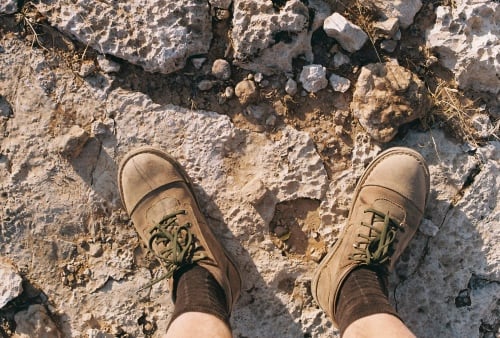
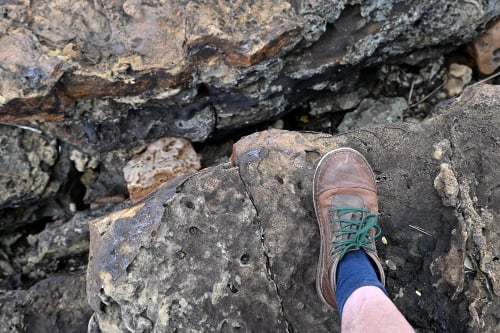
It’s a balance he tries to strike in his work. To show what’s there without overstating it. To encourage curiosity without carelessness. Most of that work still happens on the ground. Moving through places slowly, paying attention and taking notes as he goes. These days, when he heads out, whether on assignment or with a group, his setup is simple: camera, notebook, and a few essentials. Like a pair of boots that have become part of his routine.
He came to Jim Green later than you’d expect, given how much he’s always appreciated well-made leather shoes. He jokes that he’s a bit of an Imelda Marcos when it comes to footwear (the former First Lady of the Philippines famously had a massive shoe collection). His first pair was the African Ranger, and it stuck straight away.
“They’re just the right shoe,” he says.
Light enough to travel with, durable enough for rough terrain, and comfortable enough to wear all day.
In a way, it mirrors everything else he does. When nothing else is demanding your attention, you can focus on what’s right in front of you.
And actually see it.