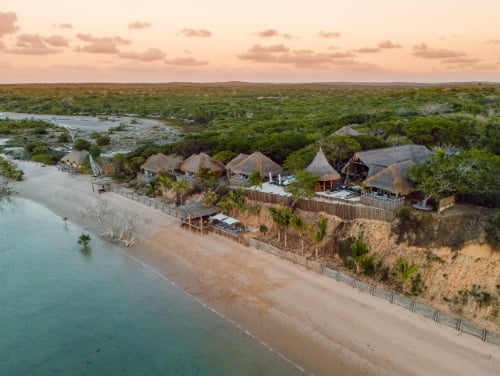
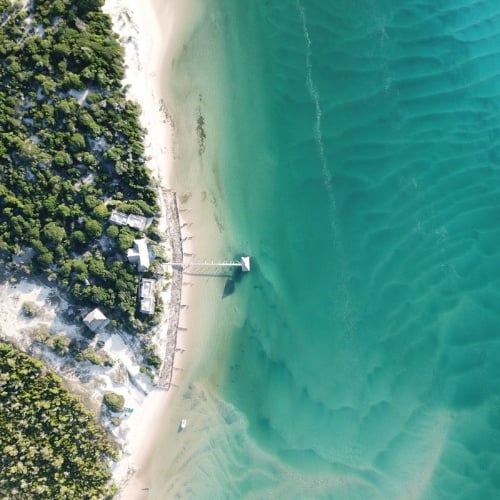
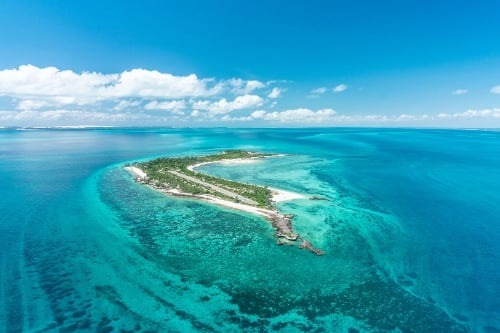
The Sanctuary in Vilankulos sits on Mozambique’s San Sebastião Peninsula, where land and ocean blur into a single protected system of mangroves, dunes, wetlands, coral reefs, and open Indian Ocean, all managed as one living, dynamic whole. The starting point of conservation here isn’t the landscape, but rather the people.
Dave Gilroy arrived in 2018 with his family after working in South African conservation NGOs and provincial wildlife authorities, drawn to what he describes as a “privately managed national park” with a rare governance model. The Sanctuary is structured around a homeowners’ association that funds and runs the protected area through development levies tied to low-density residential sites and a handful of lodges. In practice, this means conservation and community development are financed directly by long-term residents and commercial partners, with some additional donor funding for specific projects. It’s a model that blends private investment with formal protected-area status under Mozambique’s national parks framework.
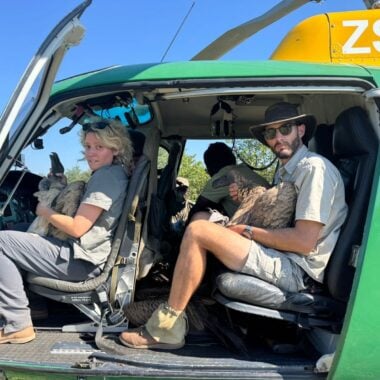
Today, Dave manages operations alongside his wife, Taryn, who is also deeply embedded in day-to-day management, and a large Mozambican team that includes long-serving staff who have been part of the project since its early years. Between them, they oversee everything from security and infrastructure to HR systems, ecological research and monitoring, reserve management, and community liaison. In total, the system supports more than 150 permanent staff.
The Sanctuary’s complexity is not only administrative, it is also ecological and social. Unlike fenced southern African reserves, this is an open coastal system with a long history of human settlement, displacement, and seasonal movement. Some communities were relocated during the establishment of the reserve, while others continue to live within or alongside it, moving through designated corridors tied to family linkages, ocean transport, trade, and historical and cultural sites.
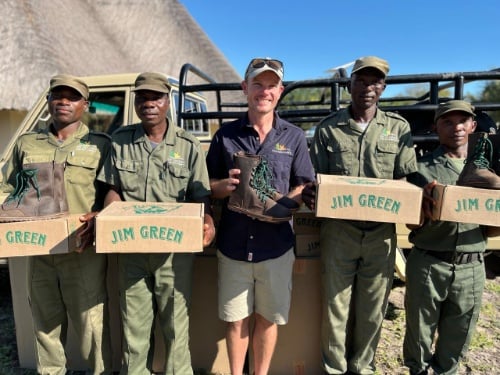
Rather than attempting to separate people from the landscape entirely, the Sanctuary operates through managed access and collaborative stewardship. Local community members are able to move through the reserve via agreed routes, while fishing councils and local governance structures help regulate marine access. On land, monthly meetings with community leaders shape decisions around benefit sharing, resource use, and conflict prevention.
At sea, the model becomes even more layered. The Sanctuary works with local fishing councils to define zones for artisanal use and conservation, with patrol teams helping protect community fishing grounds from external overfishing. In theory, it is a shared resource system and in practice, it is a constant balancing act between livelihood pressure and long-term ecological recovery.
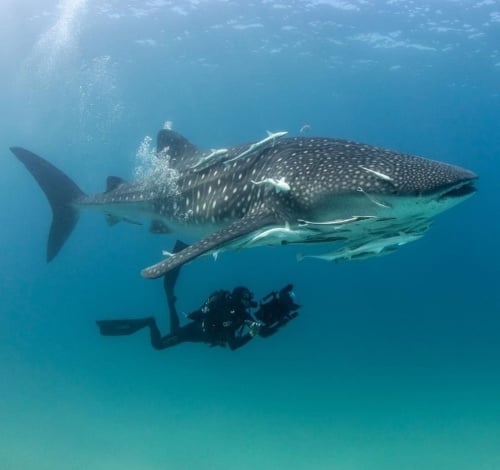
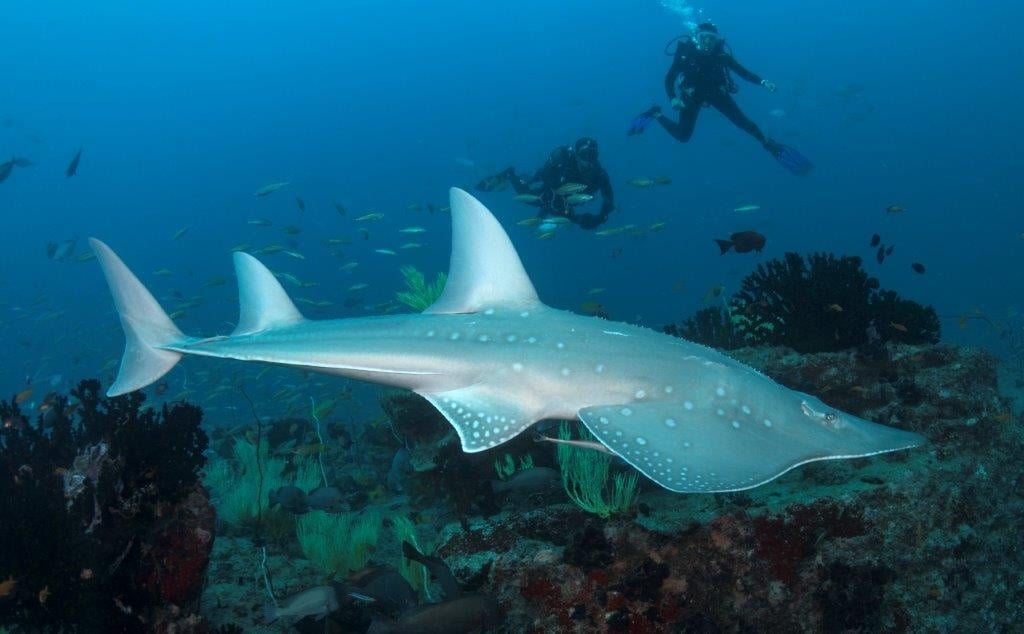
The marine side of the Sanctuary has become one of its most important conservation frontiers. The estuary system has been identified as a critical nursery area for sharks and rays, supported by data gathered through long-term monitoring and partnerships with organisations such as the Shark Conservation Fund and Marine Megafauna Foundation. Dugongs, although at the southern edge of their range here, are occasionally recorded, while turtle monitoring teams walk the 25 kilometres of coastline daily during nesting season to track nesting activity, predation, and hatchling success.
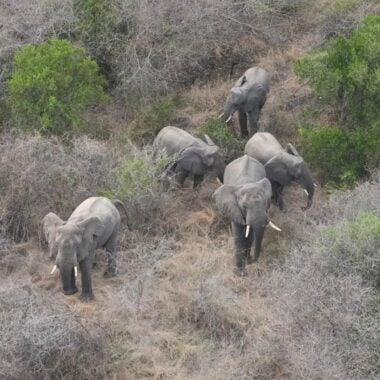
On land, conservation priorities include management of herbivore populations and the protection of miombo woodland and mangrove systems. Illegal wood harvesting remains a challenge, driven by reliance on fuelwood and construction materials, and inside the protected area, enforcement focuses on preventing extraction and maintaining forest integrity.
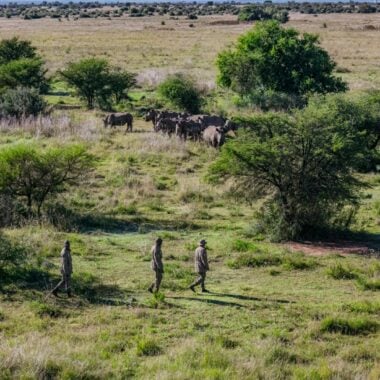
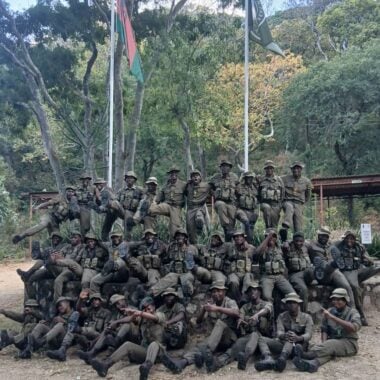
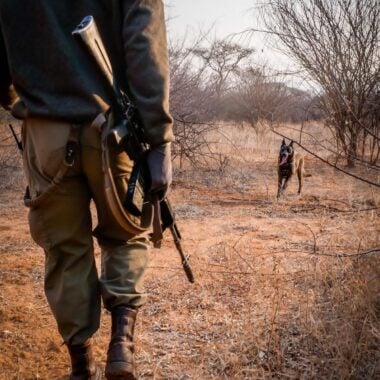
Across both land and sea, enforcement is intentionally designed to avoid confrontation. Most of the Sanctuary’s patrol teams are drawn from surrounding communities, meaning rangers often police areas where they know the people personally. As a result, the emphasis is on presence rather than punishment—engaging fishermen early, avoiding arrests where possible, and escalating only in cases of repeated or serious violations through formal maritime or fisheries authorities.
“It’s about being proactive, not confrontational,” Dave explains. “Our rangers are from our own communities. They go home and live next door to the people they’re working with.”
That approach extends into education as well, with new partnerships bringing structured marine conservation curricula into local schools and community groups. Rather than building a standalone education programme, the Sanctuary is plugging into existing initiatives run by organisations already active in the region, allowing messaging to remain consistent and scalable.
Looking ahead, the Sanctuary’s biggest focus is not expansion, but consolidation, particularly within community governance. A major current project, supported by international funding partners, aims to strengthen the governance structures of local communities so they are empowered to manage natural resources independently.
Concurrently, the team is working to formalise access to natural materials used in construction, ensuring that resources like reeds and grasses are sustainably harvested and more equitably distributed within communities.
Mozambique’s coastline is increasingly targeted for sand mining, industrial development, and seismic testing for oil and gas, often directly adjacent to protected areas. These competing visions of development are reshaping the region quickly, forcing conservation teams to navigate a difficult balance between economic opportunity and ecological risk.
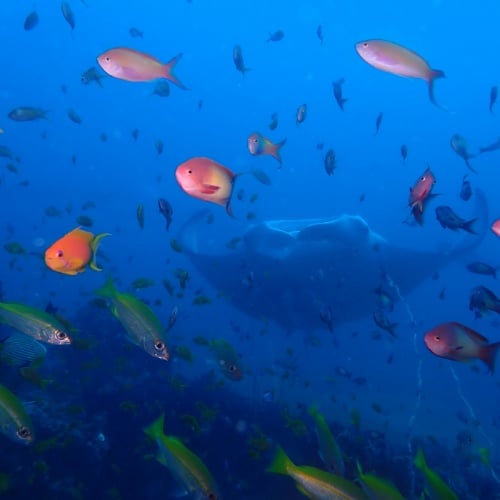
However, there are signs the Sanctuary’s model is working. Fish stocks in protected areas are improving, dugong sightings are increasing, and community-led resource management is becoming more formalised and effective.
Dave believes the long-term goal is straightforward: strengthen the systems that help communities manage and benefit from the natural resources around them. In the Sanctuary, conservation works best when people have a stake in protecting what remains.
Cheers,
The Jim Green Team
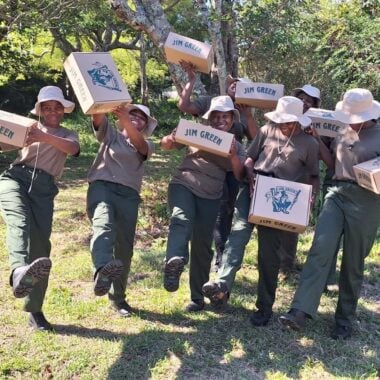
Through our Boots for Rangers initiative, run in partnership with the Game Rangers Association of Africa, we donate one pair of boots to a ranger for every ten pairs sold from our Ranger range. These boots support conservation teams at sites across Africa, with over 10 000 pairs already on the ground. As of 01/08/2026